
Five rooms, five very different jobs.
A two-year-old needs something different from a school-age child. Our rooms are built around what each age actually needs, not one program stretched across the building.
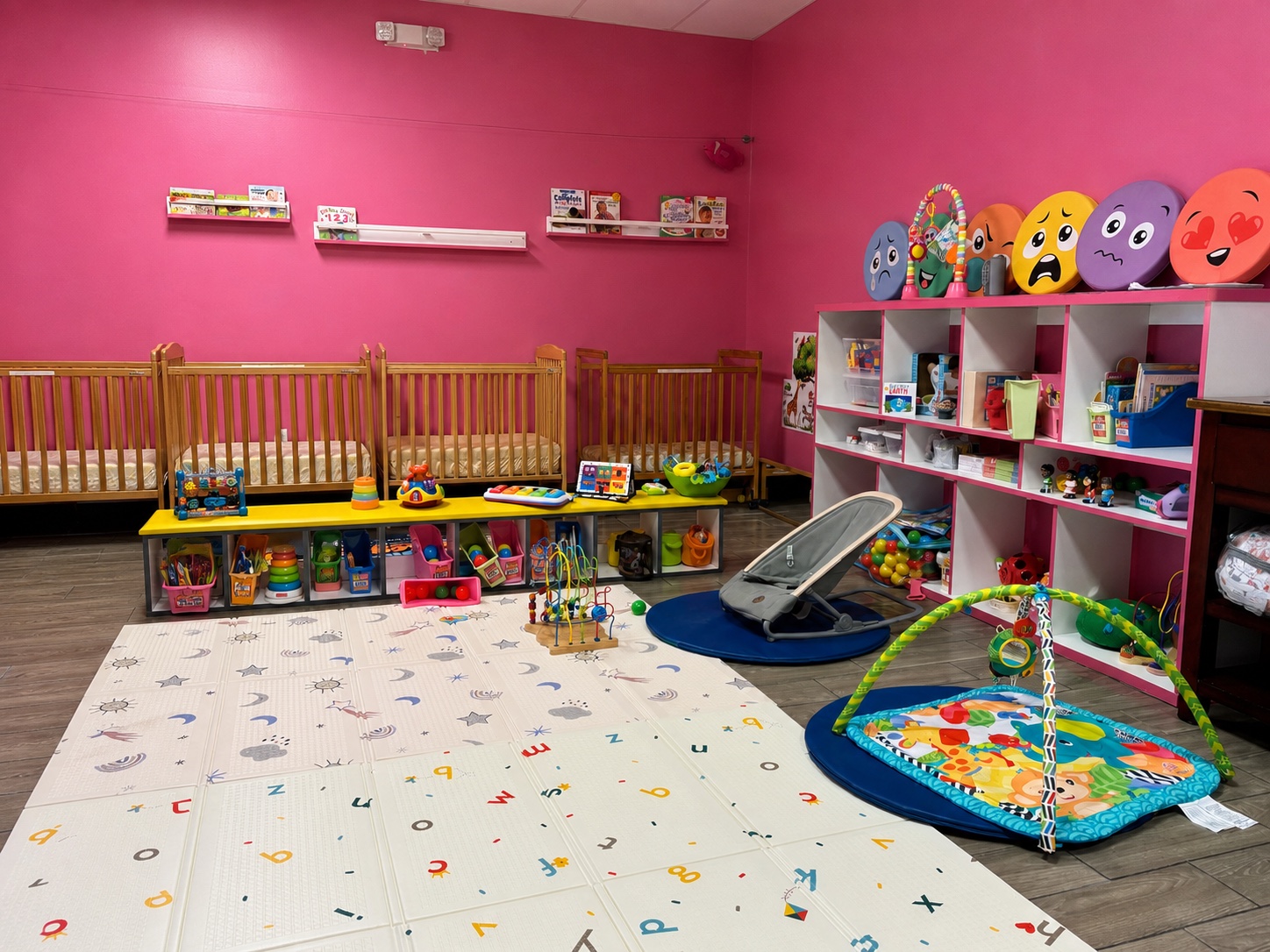
Infants
6 weeks – 17 monthsBottles, naps, and tummy time on your baby's own clock. One primary teacher does most of the caregiving so your infant learns one face first, and we log every feed, nap, and change in Procare as it happens.
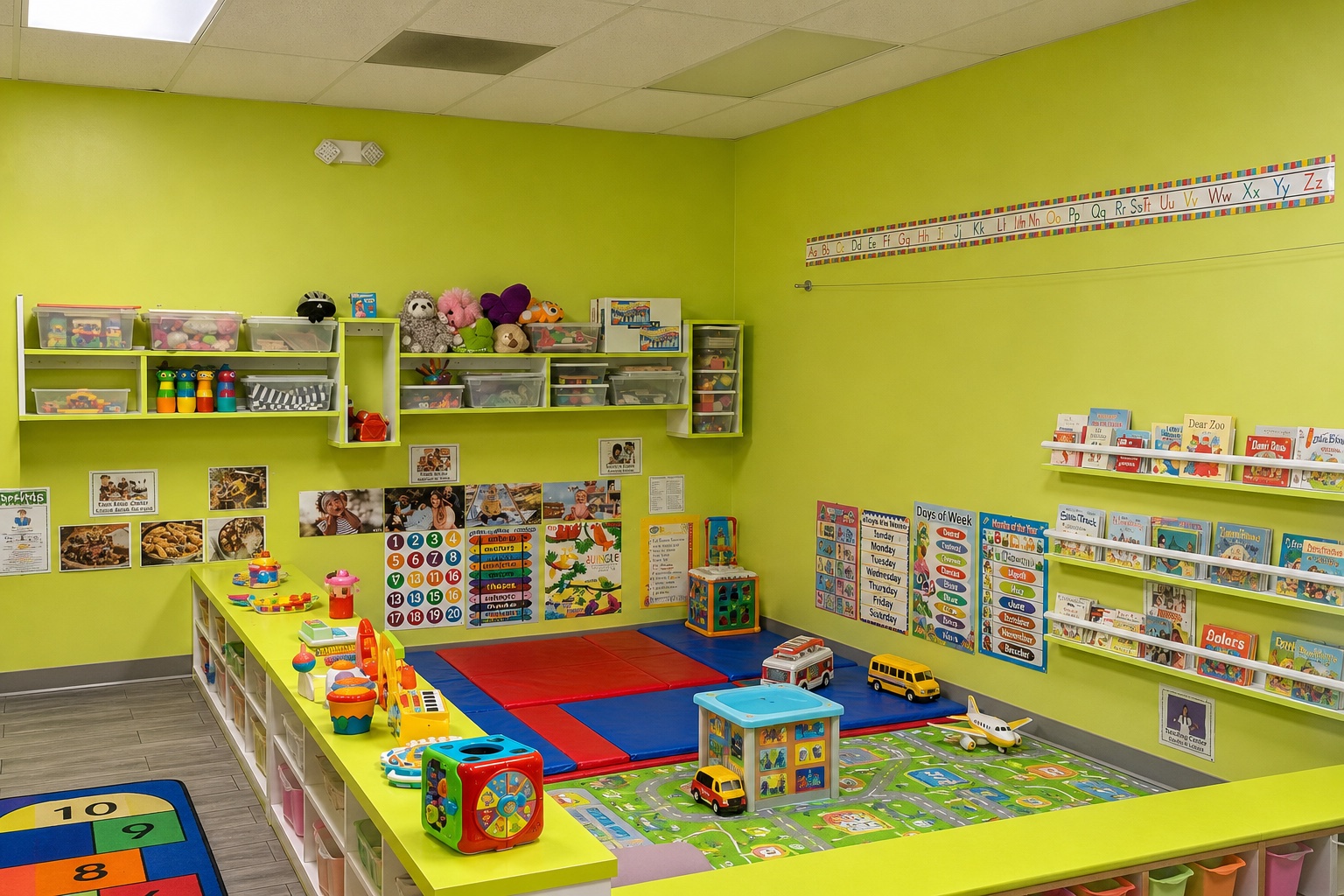
Toddlers
18 – 35 monthsThis is the year of language and independence. We name feelings out loud, practice sharing with a lot of adult help, start potty learning when your child is ready, and get outside twice a day to burn off the rest.
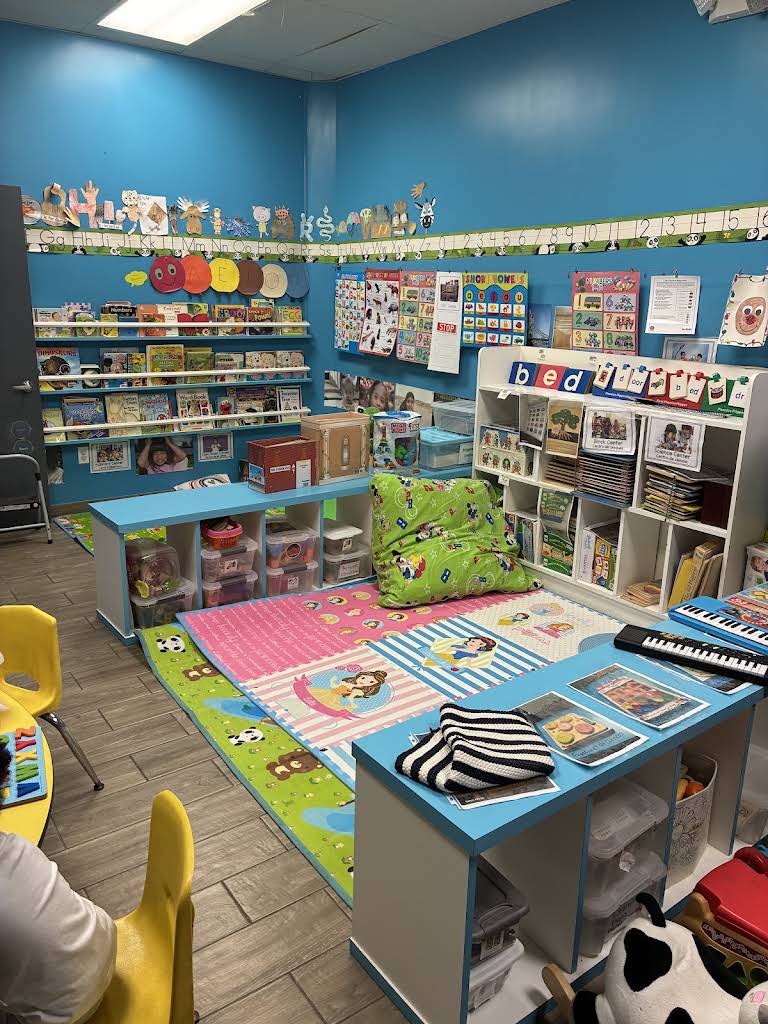
Preschool
3 – 4 yearsFrog Street circle time, then small groups at learning centers: writing, building, sorting, dramatic play. Teachers step back a little so children solve problems with each other before an adult steps in.
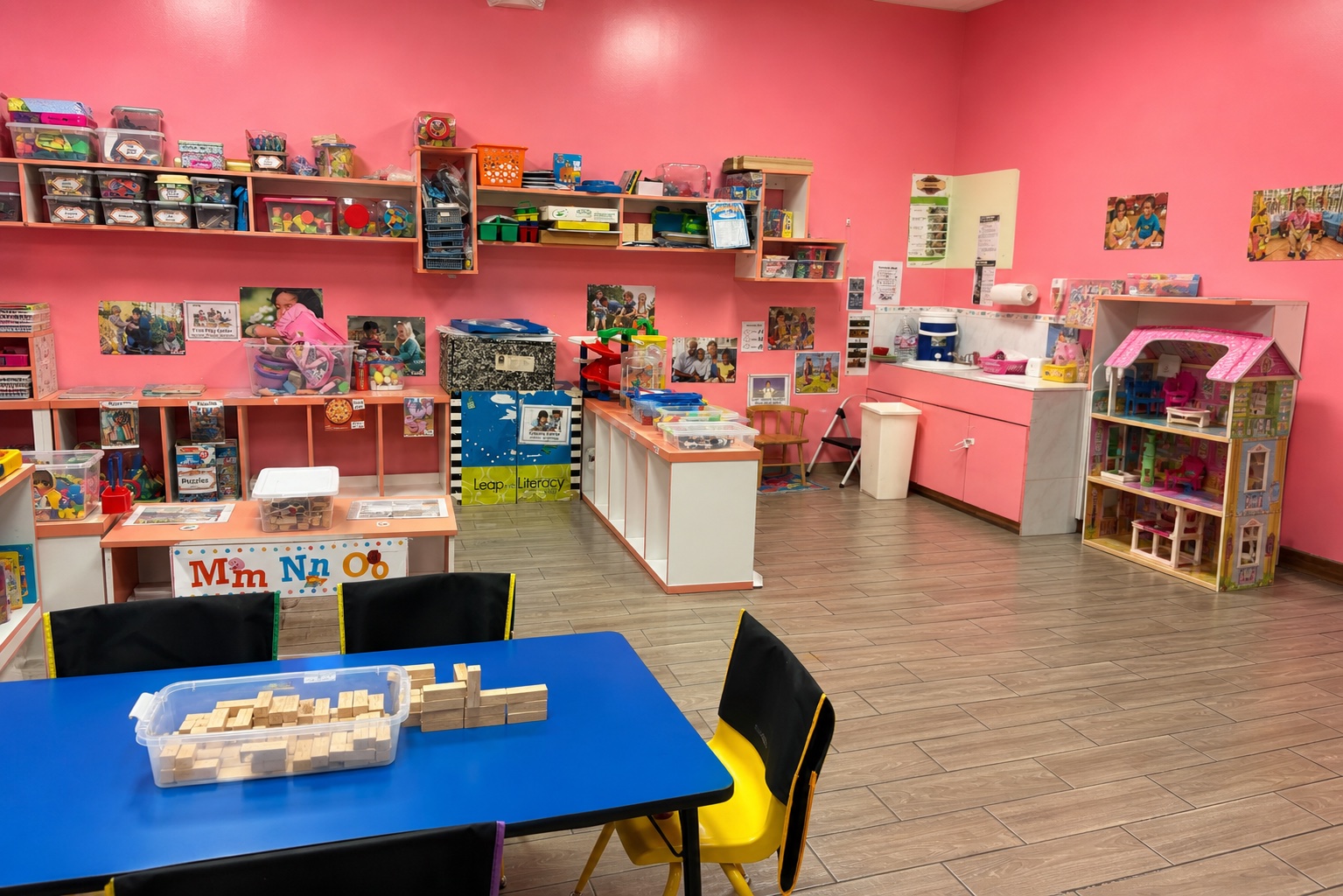
Pre-K
4 – 5 yearsName writing, letter sounds, counting and patterns, and the classroom habits kindergarten actually asks for: sitting for a story, raising a hand, packing your own bag. Delivered as games, not worksheets.
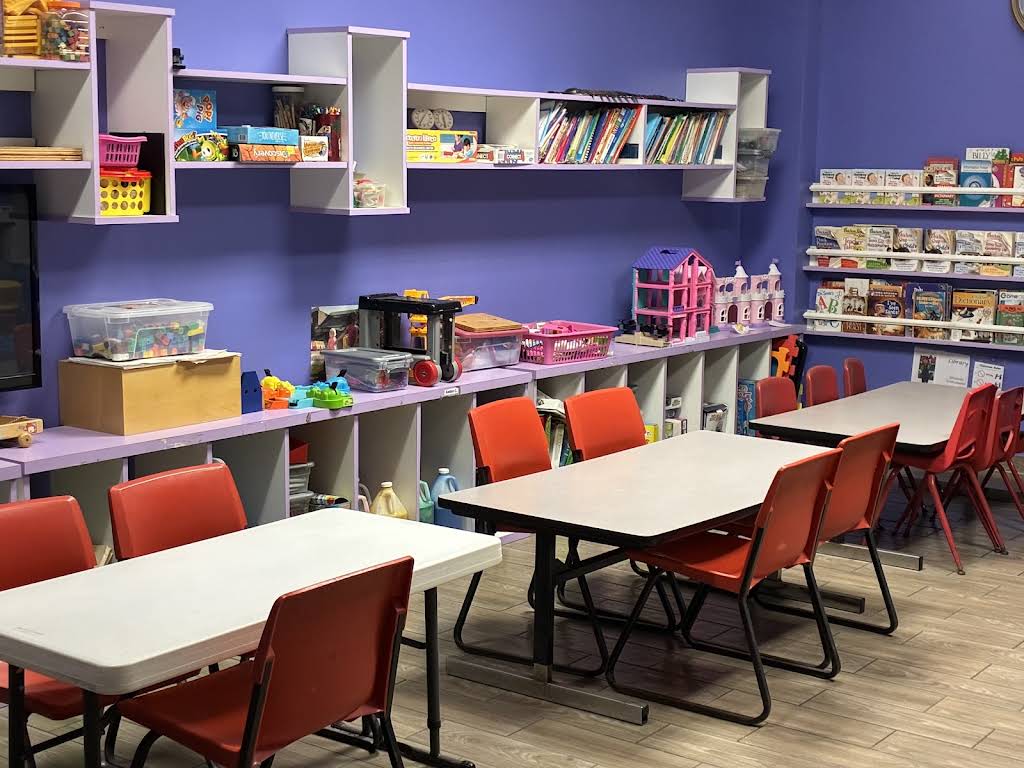
School Age
5 – 12 yearsOlder children get more choice in how they spend their time: homework and reading support when they need it, games and creative projects when they don't, and plenty of space to talk with friends. The room balances growing independence with dependable adult guidance.
The curriculum behind the play
We use Frog Street, a research-based early childhood curriculum. In practice that means every song, story, and centre has a reason behind it, and teachers know what each child is working on this week.